


Hip Dysplasia
What is Hip Dysplasia?
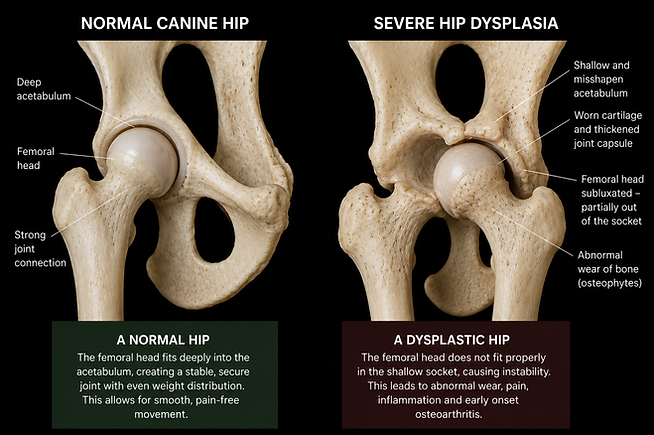
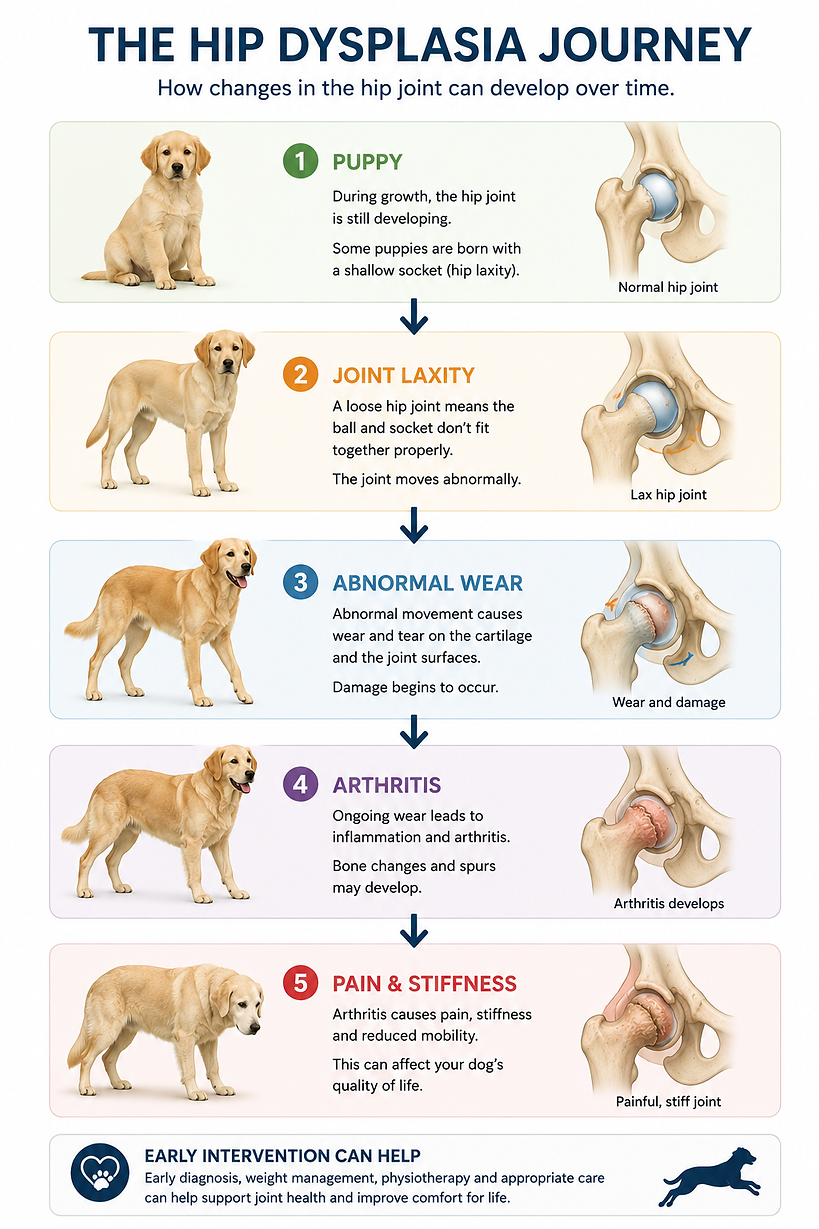
Hip dysplasia is a developmental orthopaedic condition where the ball-and-socket hip joint does not fit together correctly. This causes abnormal movement within the joint, leading to instability, pain, inflammation, and eventually osteoarthritis.
-
One of the most common orthopaedic conditions in dogs
-
Often develops during growth
-
Can affect one or both hips
-
Severity varies greatly between dogs
-
Can occur in both large and small breeds
Severities
Hip dysplasia exists on a spectrum from mild to severe.
Mild
-
Minimal joint laxity
-
Few or no clinical signs
-
Often diagnosed incidentally
Moderate
-
Increased joint instability
-
Early arthritic changes
-
Intermittent stiffness or lameness
Severe
-
Significant joint instability
-
Advanced arthritis
-
Chronic pain and mobility issues
-
Marked muscle loss and reduced activity
Clinical signs do not always correlate with radiographic severity. Some dogs with significant changes may cope well, whilst others with mild changes can be very painful.

Symptoms
Common signs may include:
-
Bunny hopping gait
-
Difficulty rising
-
Reluctance to jump
-
Struggling with stairs
-
Reduced exercise tolerance
-
Hindlimb weakness
-
Stiffness after exercise
-
Waddling gait
-
Muscle loss over the hindquarters
-
Sitting unevenly
-
Behavioural changes associated with pain
Diagnosis
Diagnosis typically involves:
-
Veterinary examination
-
Orthopaedic assessment
-
Gait analysis
-
X-rays (radiographs)
-
Hip scoring schemes
-
Advanced imaging where required
Early diagnosis allows for earlier intervention and management.
Treatment
Treatment depends on age, severity, lifestyle, and clinical signs.
Options may include:
-
Weight management
-
Physiotherapy
-
Hydrotherapy
-
Pain relief medication
-
Joint supplements
-
Lifestyle modifications
-
Surgical intervention in selected cases
-
Long-term arthritis management
Many dogs are successfully managed without surgery through appropriate rehabilitation and weight control.

How Physiotherapy Helps
Physiotherapy plays an important role in both the management of hip dysplasia and the secondary osteoarthritis that often develops over time.
Treatment programmes are individually tailored and focus on improving comfort, strength, mobility, and quality of life.
Improving Muscle Strength
Strong muscles around the hips and pelvis help stabilise the joint and reduce abnormal movement. Physiotherapy focuses on building and maintaining these supporting muscles safely.
Supporting Joint Stability
Targeted exercises can improve neuromuscular control and joint stability, helping dogs move more efficiently and comfortably.
Reducing Pain & Compensation
Dogs with hip dysplasia often alter their posture and movement patterns to avoid discomfort. This can create secondary pain elsewhere in the body, particularly in the back, knees, and forelimbs. Manual therapy and rehabilitation can help address these compensations.
Maintaining Mobility
Stiffness and reduced range of motion are common in affected dogs. Physiotherapy techniques can help maintain flexibility and encourage normal movement patterns.
Improving Function
Whether your goal is supporting a growing puppy, maintaining a senior dog, or improving a sporting dog's performance, physiotherapy can help maximise function and mobility.
Home Exercise Programmes
Owners receive personalised exercise plans to continue progress between appointments and support long-term management.
Benefits of physiotherapy may include:
-
Increased muscle strength
-
Improved stability
-
Reduced discomfort
-
Better mobility
-
Improved posture
-
Increased confidence
-
Enhanced quality of life
How Hydrotherapy Helps
Hydrotherapy is one of the most beneficial rehabilitation tools available for dogs with hip dysplasia.
The underwater treadmill provides controlled exercise while significantly reducing the forces placed through the hip joints.
Reduced Joint Loading
Water buoyancy supports part of the dog's body weight, reducing stress on painful or unstable hips whilst still allowing active movement.
Building Muscle Safely
The natural resistance of water encourages muscle strengthening without the impact associated with land-based exercise.
Encouraging Normal Movement
Many dogs move more freely in water than they do on land. This allows them to develop improved gait patterns and confidence whilst remaining comfortable.
Improving Cardiovascular Fitness
Hydrotherapy provides excellent low-impact conditioning, helping maintain fitness without excessive strain on affected joints.
Long-Term Management
Hydrotherapy can be particularly beneficial throughout a dog's life, whether managing a young dog with hip dysplasia or supporting an older dog with secondary arthritis.
Benefits of hydrotherapy may include:
-
Improved muscle development
-
Enhanced hip stability
-
Better mobility
-
Reduced discomfort
-
Improved fitness
-
Increased endurance
-
Improved quality of life
Further Information
Weight Management is Essential
Maintaining a healthy body weight is one of the most important aspects of managing hip dysplasia. Excess weight significantly increases forces through the hip joints and can accelerate the progression of arthritis.
Large Breeds Are More Commonly Affected
Hip dysplasia is frequently seen in:
-
Labrador Retrievers
-
Golden Retrievers
-
German Shepherd Dogs
-
Rottweilers
-
Bernese Mountain Dogs
-
Newfoundlands
-
Spaniels
-
Border Collies
However, any breed or crossbreed can be affected.
Early Intervention Matters
Many dogs show subtle signs long before severe arthritis develops. Early assessment and rehabilitation can help support joint health, improve movement, and maintain muscle strength throughout life.
Hip Dysplasia Doesn't Mean the End of an Active Life
With appropriate management, many dogs with hip dysplasia continue to enjoy active, happy lives. A combination of physiotherapy, hydrotherapy, weight management, veterinary care, and tailored exercise can make a significant difference to long-term comfort and mobility.
We Can Help
At Paws & Claws Veterinary Physiotherapy & Hydrotherapy Clinic, we provide personalised rehabilitation programmes designed to support dogs with hip dysplasia at every stage of life, helping them stay active, comfortable, and confident for as long as possible.