


Senior Pet Mobility
What is Senior Pet Mobility?
Maintaining mobility helps pets remain active, independent, and comfortable for longer.
Benefits of supporting mobility include:
-
Improved comfort
-
Increased independence
-
Better muscle strength
-
Improved confidence
-
Enhanced quality of life
-
Reduced risk of injury
-
Improved ability to perform daily activities
Common Signs of Reduced Mobility
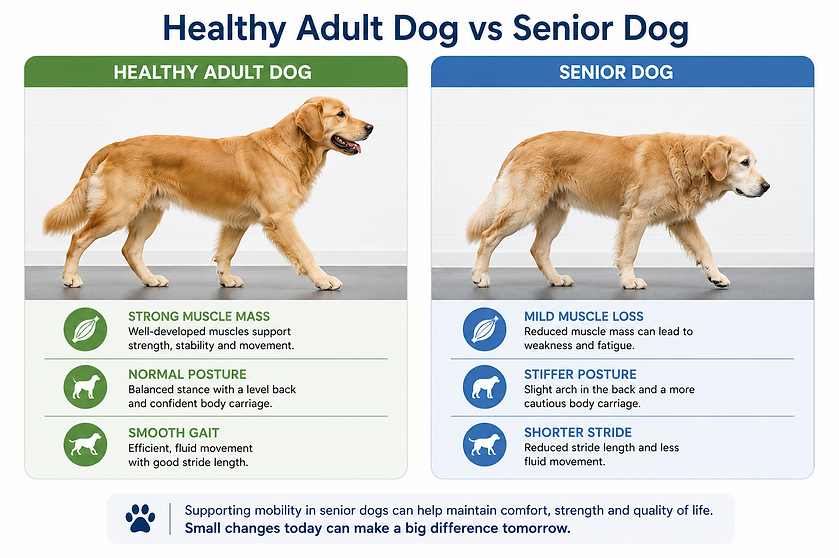
Many signs of mobility decline develop gradually and can easily be mistaken for "just getting old."
Common signs include:
-
Slowing down on walks
-
Stiffness after rest
-
Difficulty rising
-
Reluctance to jump
-
Reduced stamina
-
Difficulty with stairs
-
Slipping on hard floors
-
Muscle loss
-
Reduced balance
-
Hesitation during exercise
-
Changes in posture
-
Reduced interest in activities
-
Increased sleeping
Early recognition often allows intervention before mobility declines further.

Common Conditions Affecting Senior Pets
Senior mobility issues are often associated with:
-
Osteoarthritis
-
Hip Dysplasia
-
Elbow Dysplasia
-
Cruciate Ligament Disease
-
Luxating Patellas
-
Intervertebral Disc Disease (IVDD)
-
Degenerative Myelopathy
-
Spondylosis
-
Obesity
-
Muscle loss (Sarcopenia)
Many senior pets are affected by more than one condition simultaneously.
What Does Mobility Rehabilitation Involve?
Every rehabilitation programme is tailored to the individual pet, their lifestyle, and any underlying conditions.
Assessment
A comprehensive assessment may include:
-
Mobility evaluation
-
Gait analysis
-
Joint range of motion assessment
-
Muscle condition scoring
-
Balance assessment
-
Functional movement assessment
Physiotherapy
Treatment may include:
-
Manual therapy
-
Massage
-
Stretching
-
Joint mobilisation
-
Therapeutic exercises
Strengthening Exercises
Specific exercises help maintain:
-
Muscle mass
-
Joint stability
-
Balance
-
Coordination
-
Confidence
Hydrotherapy
The underwater treadmill provides low-impact exercise that supports movement whilst reducing stress on joints.
Home Exercise Programmes
Owners receive practical exercises and management advice to help maintain mobility between appointments.


How Physiotherapy Helps
Physiotherapy can play an important role in helping senior pets remain active, mobile, and comfortable.
Managing Stiffness & Discomfort
Many older pets experience stiffness due to arthritis, muscle tension, or reduced flexibility.
Manual therapies can help improve comfort and movement.
Maintaining Muscle Mass
Age-related muscle loss (sarcopenia) is common in senior pets.
Targeted exercises help preserve and rebuild strength.
Improving Joint Function
Maintaining joint mobility helps support more comfortable and efficient movement.
Enhancing Balance & Coordination
As pets age, balance and body awareness often decline.
Specific exercises can help improve stability and reduce the risk of falls.
Supporting Independence
Improved mobility often allows pets to continue enjoying daily activities such as walks, playing, climbing stairs, and getting in and out of vehicles.
Benefits of physiotherapy may include:
-
Reduced stiffness
-
Improved mobility
-
Better balance
-
Increased strength
-
Improved confidence
-
Greater independence
-
Enhanced quality of life
How Hydrotherapy Helps
Hydrotherapy is particularly beneficial for senior pets because it provides effective exercise with minimal impact on joints.
Reduced Joint Loading
Water buoyancy supports the body and reduces stress on painful joints.
Maintaining Muscle Strength
Water resistance helps strengthen muscles safely and effectively.
Improving Mobility
The repetitive walking motion within the underwater treadmill encourages joint movement and flexibility.
Improving Fitness
Many senior pets become less active over time.
Hydrotherapy can help maintain cardiovascular fitness and endurance.
Building Confidence
Older pets often move more confidently in the supportive water environment.
Benefits of hydrotherapy may include:
-
Increased muscle strength
-
Improved mobility
-
Better endurance
-
Reduced joint stress
-
Improved balance
-
Enhanced confidence
-
Improved quality of life
Further Information
Ageing Does Not Mean Pain Is Normal
Many owners assume slowing down is an unavoidable part of ageing.
However, reduced mobility is often linked to treatable conditions such as arthritis, muscle loss, or neurological disease.
Muscle Matters
Maintaining muscle mass is one of the most important factors in preserving mobility and independence in senior pets.
Early Intervention Is Best
Addressing mobility changes early can help maintain function and slow further decline.
Every Senior Pet Is Different
Chronological age does not always reflect physical age.
Some pets remain highly active well into their senior years, whilst others require additional support much earlier.
We Can Help
At Paws & Claws Veterinary Physiotherapy & Hydrotherapy Clinic, we provide tailored physiotherapy and hydrotherapy programmes designed to help senior pets remain comfortable, active, independent, and enjoying life for as long as possible.