


Neurological Rehabilitation
What is Neurological Rehabilitation?
Neurological rehabilitation is a specialised form of physiotherapy designed to help dogs recovering from neurological injuries, diseases, or surgery affecting the brain, spinal cord, nerves, and muscles.
The aim is to improve mobility, coordination, strength, balance, and independence whilst maximising recovery and quality of life.
Benefits may include:
-
Improved mobility
-
Better balance and coordination
-
Increased muscle strength
-
Improved confidence
-
Enhanced neurological function
-
Reduced secondary complications
-
Improved quality of life
Common Conditions We See
Neurological rehabilitation can benefit dogs with a wide range of neurological conditions, including:
Spinal Conditions
-
Intervertebral Disc Disease (IVDD)
-
Fibrocartilaginous Embolism (FCE)
-
Cervical Disc Disease
-
Lumbosacral Disease
-
Spinal Trauma
-
Vertebral Fractures
Neuromuscular Conditions
-
Degenerative Myelopathy (DM)
-
Polyradiculoneuritis
-
Peripheral Nerve Injuries
-
Neuropathies
-
Myopathies
Brain & Vestibular Conditions
-
Vestibular Disease
-
Stroke
-
Brain Surgery Recovery
-
Neurological Trauma
Post-Surgical Rehabilitation
-
Hemilaminectomy
-
Ventral Slot Procedures
-
Spinal Stabilisation Surgery
-
Other neurological procedures
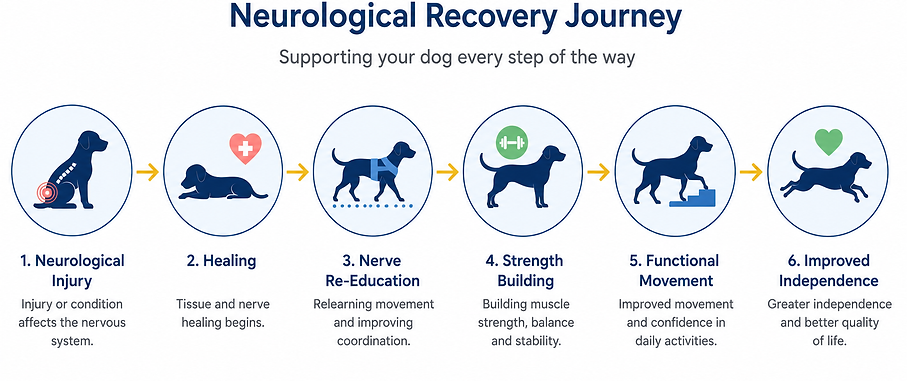

Stages of Rehabilitation
Every neurological patient is different, and recovery timelines vary significantly depending on the condition and severity.
Phase 1: Early Recovery
Days 1–14
Goals:
-
Manage pain and discomfort
-
Prevent secondary complications
-
Maintain joint mobility
-
Encourage early movement
May include:
-
Assisted standing
-
Passive range of motion
-
Massage
-
Weight shifting
-
Supported walking
-
Owner education
Phase 2: Neurological Re-Education
Weeks 2–8
Goals:
-
Re-establish neurological pathways
-
Improve limb placement
-
Improve balance and coordination
-
Encourage functional movement
May include:
-
Proprioception exercises
-
Weight shifting
-
Controlled walking
-
Assisted gait training
-
Balance exercises
Phase 3: Strength & Function
Weeks 6–16
Goals:
-
Rebuild muscle mass
-
Improve stability
-
Improve endurance
-
Restore independence
May include:
-
Strengthening exercises
-
Cavaletti poles
-
Sit-to-stand exercises
-
Step work
-
Core stability exercises
-
Hydrotherapy
Phase 4: Long-Term Management
Ongoing
Goals:
-
Maintain mobility
-
Prevent decline
-
Support independence
-
Improve quality of life
May include:
-
Ongoing physiotherapy
-
Hydrotherapy
-
Home exercise programmes
-
Strength and conditioning
-
Mobility support
What Does Rehabilitation Involve?
Treatment plans are tailored to each individual dog and may include:
Physiotherapy
-
Manual therapy
-
Massage
-
Joint mobilisation
-
Stretching
-
Neurological assessment
Gait Re-Education
-
Assisted walking
-
Weight-bearing exercises
-
Functional movement training
-
Movement pattern correction
Proprioception
-
Balance exercises
-
Paw placement exercises
-
Sensory stimulation
-
Coordination activities
Hydrotherapy
-
Underwater treadmill therapy
-
Gait patterning
-
Strengthening
-
Confidence building
Electrotherapies
Where appropriate:
-
NMES
-
TENS
-
K-Laser
-
PEMF Therapy
Home Exercise Programmes
Tailored exercises help continue progress between appointments and maximise recovery.


How Physiotherapy Helps
Neurological rehabilitation focuses on helping the nervous system and body work together more effectively.
Improving Limb Awareness
Neurological conditions often affect a dog's ability to know where their limbs are positioned.
Targeted exercises help improve proprioception and coordination.
Encouraging Normal Movement
Dogs commonly develop abnormal movement patterns following neurological injury.
Physiotherapy helps encourage more efficient and functional movement.
Rebuilding Strength
Weakness develops rapidly when mobility is reduced.
Specific strengthening exercises help improve muscle mass and stability.
Improving Balance
Many neurological patients struggle with balance and coordination.
Rehabilitation helps improve confidence and reduce the risk of falls.
Preventing Secondary Problems
Reduced mobility can lead to muscle loss, stiffness, pressure sores, and compensatory pain.
Physiotherapy aims to minimise these complications.
Benefits of physiotherapy may include:
-
Improved mobility
-
Better coordination
-
Increased strength
-
Improved balance
-
Enhanced confidence
-
Greater independence
-
Improved quality of life
How Hydrotherapy Helps
Hydrotherapy is one of the most valuable tools available for neurological rehabilitation.
The underwater treadmill provides a safe and supportive environment for movement whilst reducing the risk of falls.
Reduced Weight Bearing
Water buoyancy supports the body and allows movement that may be difficult on land.
Encouraging Limb Movement
The resistance and sensory feedback provided by water can encourage active limb use and stepping patterns.
Improving Muscle Strength
Water provides gentle resistance to help rebuild strength safely.
Supporting Balance & Coordination
The supportive environment allows dogs to practise movement with greater confidence.
Improving Gait Patterns
The repetitive stepping motion of the underwater treadmill can help reinforce walking patterns and improve stride quality.
Building Confidence
Many neurological patients become anxious or hesitant when moving.
Hydrotherapy can help improve confidence and willingness to move.
Benefits of hydrotherapy may include:
-
Improved stepping patterns
-
Better muscle strength
-
Enhanced coordination
-
Improved balance
-
Increased confidence
-
Improved mobility
-
Better quality of life
Further Information
Recovery Can Take Time
Neurological recovery is often slower than orthopaedic recovery.
Progress may continue for weeks, months, or even longer depending on the condition.
Small Improvements Matter
Recovery is not always linear. Even small improvements in strength, coordination, and independence can significantly improve quality of life.
Every Dog's Journey Is Different
Two dogs with the same diagnosis may recover very differently.
Rehabilitation programmes are therefore tailored to the individual patient rather than the condition alone.
Early Intervention Matters
Starting rehabilitation as early as appropriate can help maximise recovery and reduce secondary complications.
We Can Help
At Paws & Claws Veterinary Physiotherapy & Hydrotherapy Clinic, we provide tailored neurological rehabilitation programmes designed to maximise recovery, improve mobility, build confidence, and support dogs living with neurological conditions at every stage of their journey.